2INGIS sleeve and custom guides: when no sleeve is needed
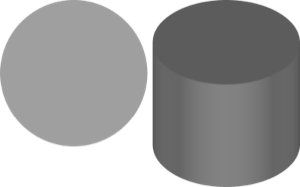
A sleeve is a metal cylinder bonded into a surgical guide that sets the drilling axis and depth. All of classic guided surgery rests on this one part. But there are situations where a standard sleeve gets in the way or physically won't fit — and that's when non-standard guide systems come in: patient-specific 2INGIS designs, keyless protocols and universal sleeves.
Below we break down the limits of the classic sleeve, what 2INGIS sleeve offers, and which other custom surgical guide systems are worth keeping in your arsenal. Every library mentioned is available in the DentalLibs catalog for exoplan.
The classic sleeve: where its capabilities end
In the standard protocol, the drill passes through a metal sleeve using one of several schemes: sleeve-on-drill (the sleeve sits on the drill body), sleeve-in-sleeve (interchangeable reduction keys for each diameter) or through guide keys. The sleeve provides rigidity and accuracy, but it adds height to the working stack.
Height is exactly the bottleneck. The combined height of the sleeve, drill length and handpiece has to fit inside the open mouth. In posterior regions, with limited mouth opening and on short implants, that clearance often isn't enough. Add narrow interdental spaces and thin ridges, and the classic cylindrical sleeve stops being convenient.
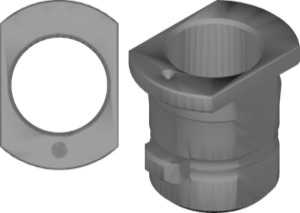
2INGIS sleeve: guides made for the specific patient
2INGIS is a manufacturer that produces patient-specific surgical guides with its own guiding-element geometry, rather than off-the-shelf plastic guides with a bonded sleeve. This approach helps where a standard guide design won't seat correctly on a complex clinical situation.
For planning in exoplan you use the 2INGIS sleeve library — it holds the correct parameters for the guiding component so the CAD model of the guide matches the real 2INGIS protocol. This is the case where you choose the guide system to fit the patient, rather than fitting the patient to a universal sleeve.
Keyless and sleeveless guided surgery
Keyless systems reduce the stack height: the drill is guided by the body of the guide itself or by an integrated guiding element, without interchangeable reduction keys. Fewer parts means less total height and fewer steps at the chair.
These protocols include BioHorizons Pro sleeve (keyless, open digital workflow), as well as OSSTEM OneGuide and Hiossen OneGuide. For patients with limited mouth opening, a keyless scheme often solves the problem where a classic sleeve won't clear on height.
- lower working-stack height — critical in posterior regions;
- fewer interchangeable keys and steps during surgery;
- open workflow — plan in exoplan, print the guide in your own lab;
- requires precise calibration for the specific drill system.
Universal sleeves: exocad Universal and UniversalPilot
When an implant brand has no dedicated sleeve library, or you're doing a pilot / partially guided protocol, universal sleeves not tied to a specific implant system come to the rescue. They cover the long tail of cases with a single component.
In exoplan these are the exocad Universal Sleeve and the nt-trading UniversalPilot sleeve — a universal/pilot sleeve from the German manufacturer. This kind of sleeve is handy for initial drilling and as a fallback when you don't have the brand-specific library on hand.
When the classic sleeve doesn't fit
A quick checklist for when to consider a non-standard guide system instead of a typical cylindrical sleeve:
- limited mouth opening or posterior location — not enough vertical clearance;
- narrow interdental spaces where the sleeve body won't fit;
- an implant system with no dedicated sleeve library — go universal;
- a complex case that calls for a patient-specific guide (2INGIS);
- the goal is to cut down the number of keys and steps (keyless protocol).
Can you make a surgical guide without a sleeve?
Can you make a surgical guide without a sleeve?
Yes — keyless protocols exist for this (for example, BioHorizons Pro, OSSTEM OneGuide), where the drill is guided by the body of the guide without a bonded metal sleeve.
How does 2INGIS differ from a regular guide with a sleeve?
2INGIS is a patient-specific system with its own guiding geometry designed for the particular clinical situation, rather than a typical guide with a universal cylindrical sleeve.
When should you use a universal sleeve?
When the implant brand has no dedicated sleeve library, or you're doing pilot / partially guided drilling. The exocad Universal Sleeve or UniversalPilot are a good fit.
What's critical for posterior regions?
Vertical clearance. The combined height of the sleeve, drill and handpiece has to fit inside the open mouth — when it doesn't, choose keyless or a shortened protocol.