Zimmer Biomet in exoplan: 49 TSV, T3 & Certain libraries
Finding the right Zimmer Biomet library for exoplan is trickier than with most brands. The system merged the legacy of two manufacturers — Zimmer Dental and Biomet 3i (ZimVie), so the catalog holds Tapered Screw-Vent, Eztetic, the 3i T3 family and the Certain line side by side. That adds up to roughly 49 entries in exoplan, and half of the differences are hidden in name suffixes: surface type, collar variant, guided kit protocol.
Let's work through the lines in order — from the best-selling Tapered Screw-Vent to the narrow Eztetic — and show what to check in the file name so you don't mix up connection geometry and surgical protocol.
Tapered Screw-Vent (TSV): how to choose a library by surface
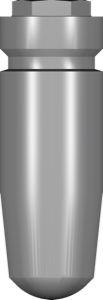
Tapered Screw-Vent is the brand's most popular line and the main reason technicians search for tapered screw-vent library. The body is tapered, the connection is an internal hex. exoplan holds a whole set of TSV variants, and they differ not by connection geometry but by surface treatment and collar design: MTX (microtexture), HA2 (hydroxyapatite coating), MG (microgrooves), MC (machined collar), MTXC and FTex (Full MTX texturing).
For most cases with the classic textured surface, Tapered Screw-Vent MTX is the fit. If you have a package with an HA2 coating or an MC/MG combination in hand, pick the file with the matching name so the catalog and the real implant labeling line up.
- MTX — the base microtextured surface, the most common choice
- HA2 — hydroxyapatite coating for soft bone
- MC / MG — machined collar and microgrooves in the cervical zone
- MTXC, FTex — extended Full MTX texturing
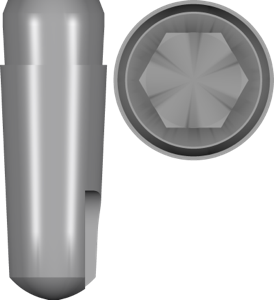
To design the guided template for this system, use TSV kit — this is a sleeve library, not an implant one, and it is selected separately from the analog file.
Certain and the Tapered Navigator and Parallel Walled Navigator protocols
The Certain family is a Biomet 3i internal connection with QuickSeat fixation (a tactile and audible "click"). In exoplan, Certain splits on two criteria, and both must be accounted for during selection.
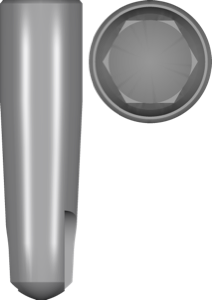
The first criterion is body shape: Tapered or Parallel Walled. The second is the guided protocol with the same name: Tapered Navigator or Parallel Walled Navigator. These are different surgical kits with different sleeves, so the implant library and the kit must belong to the same protocol. For the tapered version, use Tapered Navigator kit.
Within each Certain protocol it branches again by surface — OSSEOTITE, OSSEOTITE2, NanoTite, PREVAIL, FullOSSEOTITE, along with 3i T3 and 3i T3 DCD variants. Their connection geometry is shared, but exoplan splits them into separate files to match package labeling.
The 3i T3 line and External Hex: the Biomet 3i legacy
Beyond Certain, the catalog is home to the classic External Hex — the historic Biomet 3i interface. In exoplan it's represented by the ExtHex Tapered pairing with the same surfaces: ExtHex Tapered 3i T3, along with 3i T3 DCD, OSSEOTITE, FullOSSEOTITE and NanoTite variants.
Here it's critical not to confuse the connection: External Hex and Certain are two different worlds, incompatible with each other. If the package reads external hex, the Certain file won't fit, even if the surface is the same.
The DCD suffix in the name is a separate modification of the T3 line; if it's on your package, choose the file with DCD, not the base T3.
Eztetic 3.1 mm: a library for narrow anterior defects
Eztetic is a narrow 3.1 mm implant for tight anterior gaps, lateral incisors and limited interradicular space. The connection is a conical Certain-style interface.
In exoplan the line comes in two collar variants: Eztetic CM with a 0.5 mm machined collar and Eztetic CT. The choice between them determines platform positioning relative to bone and soft tissue, so pick the collar variant strictly per your package.
Sleeve kits and Ti-Base for Zimmer Biomet prosthetics
The surgical part in exoplan always consists of two libraries: the implant file (analog, planning) and the sleeve kit file. For Zimmer Biomet these are the TSV kit and the Tapered Navigator kit — each for its own system and drilling protocol.
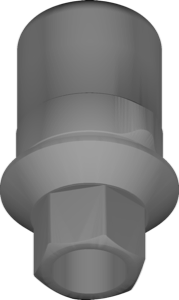
At the prosthetic stage the Ti-Base (titanium base) comes into play. For restorations on TSV in exocad DentalCAD there's TSV Express-Flex TiBase — the library provides the geometry where the crown mates with the implant interface. For Multi-Unit and hybrid connections the catalog offers separate Hybrid libraries for Certain and TSV.
All the listed lines are available in the DentalLibs catalog; many Zimmer Biomet exoplan files are marked as FDA, which simplifies selecting a clinically compatible entry.
FAQ about Zimmer Biomet libraries in exoplan
How many Zimmer Biomet libraries are in exoplan?
Roughly 49 entries: the Tapered Screw-Vent, Certain (Tapered and Parallel Walled Navigator), 3i T3 / External Hex and Eztetic lines, each with surface variants.
How does Tapered Navigator differ from Parallel Walled Navigator?
These are two different Certain surgical protocols: one for a tapered implant body and one for a parallel-walled body. Their sleeves and kits differ, and the files can't be mixed.
Which library should I choose for Tapered Screw-Vent?
The connection is shared across all TSV (internal hex), so choose by the package surface — MTX, HA2, MC/MG, etc. The base option is Tapered Screw-Vent MTX.
Are External Hex and Certain compatible?
No. The external hex (3i T3 ExtHex) and the Certain internal connection are incompatible. Go by the connection type on the package, not the surface.