Megagen vs Osstem: CAD Library Comparison for exocad
The Megagen vs Osstem debate is familiar to anyone working with Korean implants: both systems are widely installed in clinics, both have dozens of lines, and at the CAD stage the technician still runs into the same question — which library to load into exocad. The connection geometry, platform and restoration type differ between Megagen and Osstem, so a "Korean implant" isn't a single library but a family of files for each interface.
Below we compare how the two systems work in the digital workflow: how the lines, connections and components differ (custom abutment, Ti-Base, multi-unit) and how to avoid mistakes when choosing.
Megagen in exocad: AnyRidge, AnyOne and Octa1
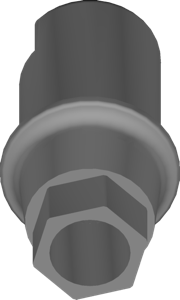
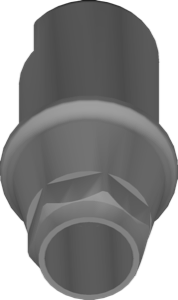
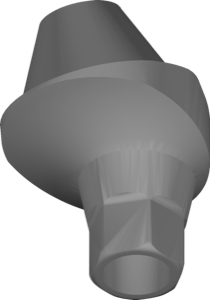
Megagen's foundation in CAD comes down to two lines. AnyRidge (AR) with a conical connection and aggressive knife-thread and AnyOne (AY) — a more classic mass-market implant. For restoration in exocad you use custom abutment blanks AnyRidge Cust Abt and AnyOne Cust Abt with different working blank heights — the catalog offers 9 mm and 13 mm variants.
The Octa1 platform (octagonal connection) stands apart, available in NC and RC versions, along with the SHA series — abutments with a pre-angled shoulder for a fixed gingival height (4, 5, 7 mm). This matters: Octa1 needs its own library, and a standard AnyRidge file won't fit here.
- AnyRidge (AR) — conical connection, custom abutments and SHA
- AnyOne (AY) — universal line with 9/13 mm blanks
- Octa1 NC/RC — octagonal platform, separate files
- STR — another custom abutment series
Osstem/Hiossen in exocad: the TS, SS, KS and US lines
Osstem has more lines, and that's the key difference from Megagen. The flagship is TS (TSIII) with an internal conical connection; it's the most common starting point, with the base being Osstem/Hiossen TS DR Standard. Alongside come SS, KS and US — each with its own interface and set of variants (SBO, SB, SBO LI/CU).
A distinctive Osstem feature is files with angular offset variants: TS DR Plus10/Plus30/Plus80 and Minus10/Minus20/Minus40. These aren't different implants but variants of scan-marker position and angulation for design — you pick the right file for the specific clinical situation.
Connections and platforms: NP/RP, conical and compatibility
Both systems use an internal conical connection, but their geometry is proprietary and not interchangeable. Megagen distinguishes platforms by interface diameter, Osstem labels them the familiar way — NP (narrow) and RP (regular). When picking the library the platform is critical: the narrow and regular platforms of the same TSIII line are different files (TSIII NP and TSIII RP).
The practical takeaway is simple: first determine the brand and line, then the platform (NP/RP/WP), then the restoration type. Only at the intersection of these three parameters do you get one correct file.
For more on the logic of picking platform and diameter, see the catalog's separate guide on implant connection types.
Ti-Base and multi-unit: restoration and All-on-X
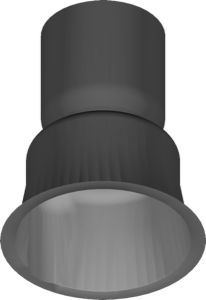
For cemented and screw-retained crowns on a titanium base, Osstem has ready Ti-Base geometries in the catalog, for example OSS TSIII RP Custom-TiBase with straight and angled variants (T3, T5). For the same task with Megagen you use the AR/AY custom abutments and the SHA series.
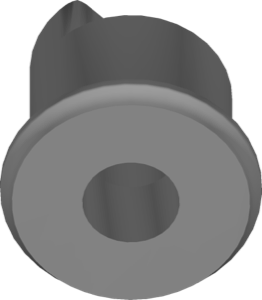
For fixed full-arch bar prostheses and All-on-4/All-on-6 bridges, both systems provide multi-unit components: for Megagen it's MUA (N type / S type), including MUA N Type Bar, and for Osstem the Multiangle line, for example Osstem Multiangle multiunit. Here it's essential to load exactly the multiunit library, not implant-level — the connection level differs.
Megagen or Osstem: which to choose for CAD
From the technician's point of view the difference isn't "better/worse" but the breadth of choice and precision of labeling. Osstem has more lines and offset variants — that's more flexible but demands care with the designations. Megagen is more compact: settle between AnyRidge and AnyOne, confirm Octa1 or not, and the file is nearly found.
Both Megagen and Osstem/Hiossen are widely represented in the exocad implant section of the DentalLibs catalog (over a thousand libraries in the category), so you can find the right interface for both systems without third-party sources. The main thing is to match the brand line, platform and component type to what's actually in the patient's mouth.
Common questions about choosing between Megagen and Osstem
Are Megagen and Osstem libraries compatible with each other?
No. The systems' connections and platforms are different and the files are not interchangeable. Each implant needs a library of its own brand and line.
Are Osstem and Hiossen the same thing?
Yes, Hiossen is Osstem's brand for the US market. In exocad libraries the interface is usually labeled Osstem/Hiossen.
What do Plus30 and Minus20 mean in Osstem library names?
They're angular offset and scan-marker position variants for design, not different implants. You pick the file for the specific clinical situation.
Which library should I use for All-on-4 on these systems?
Multi-unit: for Megagen it's MUA (N/S type), for Osstem it's Multiangle. Design is done at the MU level, not implant-level.