neo.lign in exocad: library, tooth setup, milling
The neo.lign library from bredent is one of the most sought-after artificial tooth sets in exocad DentureCAD. The search neo.lign exocad library usually means one thing: a technician wants to build a removable or fixed-removable denture with neo.lign teeth fully digitally — with a setup in a virtual arch followed by milling of the base. Below we break down what these teeth are, how to install the library, how the setup works and what matters at the milling stage.
What is neo.lign and how it differs from ordinary teeth
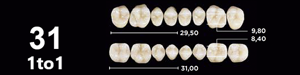
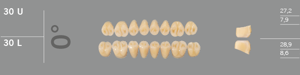
neo.lign are prefabricated bredent teeth based on a micro-filled composite material (novo.lign veneers), with a multilayer structure that mimics the natural play of enamel and dentin. The line includes separate sets for the anterior group and the posterior, designed for different arch shapes and face types.
The key difference from classic acrylic teeth is the combined "tooth + framework" concept. neo.lign teeth are designed for bonding to a milled base or framework, including one made of BioHPP (bredent's high-performance polymer). This delivers a strong adhesive bond and a wear-resistant occlusal surface.
The neo.lign library in exocad DentureCAD
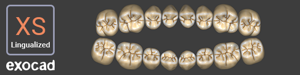
In exocad the neo.lign sets ship as part of the bredent tooth library for the Full Denture / DentureCAD module. After installation the set appears in the list of tooth manufacturers, and you select the line you need when starting the case.
The DentalLibs catalog has 23 artificial tooth libraries for exocad in total, and bredent is one of the high-demand ones among them. The library contains digital crown models with correct geometry for virtual articulation: exocad uses these shapes for automatic setup and subsequent manual correction, as well as for calculating the seating pockets during milling.
Setting up neo.lign teeth: the digital workflow
The setup follows the standard DentureCAD path: jaw scans, defining the occlusal plane, midline and reference points. Then exocad proposes an automatic setup of the neo.lign set along the arch, which you refine manually for the specific case.
- Selecting the neo.lign set of the right size and shape to match the face type;
- Positioning the anterior group along the midline and smile line;
- Adjusting occlusion and articulation for the posterior group;
- Checking contacts and base thickness under each tooth.
At this stage it is important to keep the future milling in mind: seating pockets for neo.lign are formed in the base, so leave enough material around the necks and do not move the teeth beyond the contour of the base.
Milling the base and seating neo.lign
neo.lign is realized digitally in two ways. The first is milling the base from PMMA or BioHPP with pockets for the prefabricated teeth, which are then bonded. The second is monolithic milling, where the tooth row is cut together with the base, and neo.lign sets the shape and surface texture.
For bonding, exocad generates a base with precise seating pockets that reproduce the geometry of the library teeth — this is the key reason to use exactly the neo.lign library shapes rather than arbitrary ones. Matching geometry ensures a tight fit and a predictable adhesive joint.
neo.lign vs Inspira, BlueLine and other libraries
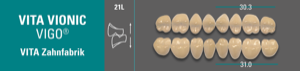
Comparing tooth sets, neo.lign stands out for its concept of bonding to a framework and its pairing with BioHPP. Among the alternatives in exocad are the built-in Inspira, BlueLine from Ivoclar and Genios from Dentsply Sirona, as well as VITA VIONIC from VITA Zahnfabrik.
The choice is more often dictated not by the software but by the material and clinical protocol. For combined dentures with a milled framework, neo.lign delivers the most predictable result thanks to pre-calculated seating pockets; for classic full dentures technicians often stay with familiar lines such as Genios or BlueLine.
Frequently asked questions about neo.lign in exocad
Where to download the neo.lign library for exocad?
The bredent tooth set with the neo.lign lines is available in the DentalLibs catalog for the Full Denture / DentureCAD module.
Can neo.lign be milled or only bonded?
Both options: bonding prefabricated teeth into the pockets of a milled base, or monolithic milling of the tooth row following the library shape.
Is BioHPP required for neo.lign?
No, the base can also be milled from PMMA. BioHPP is chosen for a strong adhesive bond and a lightweight framework.
How does neo.lign differ from acrylic teeth?
It is a micro-filled composite with a multilayer structure and a concept of bonding to a framework instead of the classic wax setup.