MIS Seven, C1, V3: One Platform and exocad Libraries
MIS Implants is an Israeli implant system with straightforward prosthetic logic: there are several lines (C1, V3, Seven, M4), but they share a common connection. That's why a search like "MIS Seven library for exocad" or "MIS C1 Ti-Base" almost always comes down to one platform in practice, not three different ones. Below we'll break down how C1, V3 and Seven relate, which CAD libraries you need in exocad DentalCAD and exoplan, and how to choose a titanium base by height and platform.
Why MIS C1, V3 and Seven Are Connection-Compatible
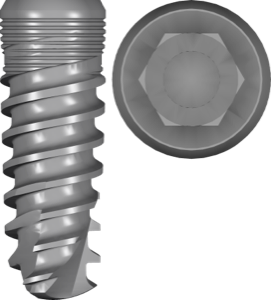
All three lines are built around an internal hex (internal hex) with a conical seat. C1 is a tapered implant with a self-tapping thread, V3 features a triangular neck shape to preserve bone, and Seven is a universal line with an internal hex and claimed high primary stability. Their neck and thread geometry differ, but the prosthetic interface is the same.
Practical takeaway: a library describing the MIS connection (for example, the variant MIS C1 V3 Ti-Base) covers both C1 and V3 within a single platform. This is convenient for the lab — no need to keep dozens of separate sets for every implant brand within a single system.
- C1 — tapered implant, internal hex
- V3 — triangular neck, same connection
- Seven — internal hex, universal line
- M4 — the same MIS prosthetic platform
MIS Seven Libraries for exocad and exoplan
For Seven the logic is two-step. In exoplan, for planning and guide printing, you need the implant library MIS SEVEN plan fda — it carries the implant geometry for the internal hex and has FDA status. For a fully guided protocol, add the MIS MGUIDE SEVEN kit sleeve set, which describes the MGUIDE system.
In exocad DentalCAD the MIS Seven library is needed at the restoration stage: to build a crown or framework on a titanium base (Ti-Base) with a correct fit on the hex. Since Seven shares the connection with C1, the same MIS base families that work for C1 apply here.
MIS C1 Ti-Base: Base Heights, Straight and Angled
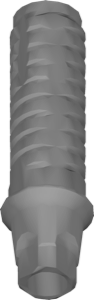
MIS C1 Ti-Base is the most frequent search for this system, and there really are many variants. From the IPD supplier you have the straight bases MIS C1 STD Custom-TiBase T3 and the T5 version, as well as Angled variants for an offset screw channel. T3 and T5 are different base sizes (gingival height and geometry), so you should choose based on the specific blank you keep on the shelf.
Separately there are New Ancorvis solutions — the AQ, AQs and V4mkr lines, plus the V4-Base MIS-C1 stock base. For V3 geometry a Ti-Base from the MISC1V3 family will fit. All of them are designed for the standard platform (STD) of the MIS C1I connection.
Pre-milled Blanks and Atlantis for MIS Seven
If you work with custom abutments from milling blanks, there are separate pre-milled blanks libraries from Dentsply Sirona for MIS Seven. They come in titanium and CoCr: the base variant MIS SEVEN pre-milled Ti, plus the AtlantisFLO and AtlantisIO-FLO configurations for the Atlantis workflow.
For printing models with an abutment, Atlantis abutment Model Printing is available for the MIS Seven interface. The difference between Ti and CoCr is only in the blank material; the connection geometry is the same, and the choice is dictated by your mill and restoration requirements.
How to Choose the Right MIS Library Without Mistakes
The selection order is always the same: first connection and platform, then restoration type, then the specific blank.
- Connection — MIS internal hex (C1, V3 and Seven are compatible)
- Platform — usually STD; verify against the manufacturer's catalog
- Type — Ti-Base, pre-milled or abutment
- Rotation — engaging (anti-rotational) for singles, non-engaging for bridges
- Height and size — T3, T5, etc. for your blank
All the MIS libraries listed — for C1, V3 and Seven — are available in the DentalLibs catalog with filters by program and manufacturer. This saves time: instead of sifting through dozens of refs, you immediately see the right connection-and-base combination.
FAQ About MIS Seven and C1 Libraries
Does one Ti-Base library fit MIS C1, V3 and Seven?
Yes, if the implants are on the same platform. C1, V3 and Seven use a common internal hex, so a base with the correct fit works across all three lines.
How does the MIS library in exocad differ from the exoplan version?
The exoplan library is needed for planning and printing the surgical guide, exocad — for designing the crown, abutment or framework. These are different files for different stages.
For MIS Seven — Ti-Base or a pre-milled blank?
Ti-Base is simpler and faster for single crowns and small bridges. A pre-milled blank is used when you need a fully custom abutment from monolithic titanium or CoCr.
Where can I get MIS libraries for exocad and exoplan?
MIS C1, V3 and Seven libraries are in the DentalLibs catalog — with a filter by program and manufacturer you can quickly find the right connection and base.