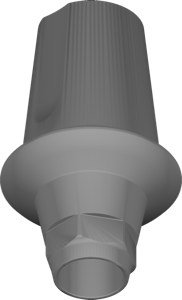
Compatible Ti-Base vs Original: Savings or Risk?
The question of "compatible Ti-Base vs original" comes up in every lab with every implant case. The price gap between an original titanium base from the implant manufacturer and a compatible Ti-Base (aftermarket titanium base) from Medentika, TruAbutment or DESS can be several times over. But it's not just about money: the way the base seats on the implant determines connection stability, screw loosening risk and the warranty on the whole restoration.
Below, no marketing spin: how a compatible Ti-Base actually differs from the original, where it saves money with no downside, and where the risk outweighs the benefit.
How a compatible Ti-Base differs from the original
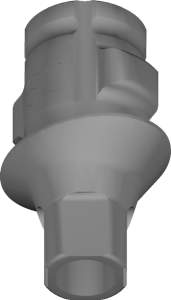
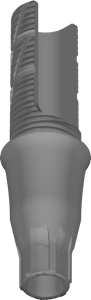
The original Ti-Base is made by the implant manufacturer itself (Straumann, Dentsply Sirona, Camlog, etc.) or its official CAD/CAM partner. The connection geometry (interface) precisely mirrors the implant seat, and tolerances are set by the manufacturer.
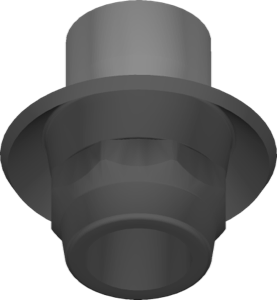
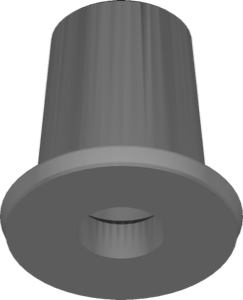
A compatible Ti-Base comes from a third party: Medentika, TruAbutment, DESS and several other suppliers. They copy the connection geometry for someone else's platform and sell it cheaper. They differ on three key parameters:
- interface accuracy — how tightly the base seats on the implant and whether there's rotational play;
- material and finish — titanium alloy (Ti-6Al-4V or Grade 5), surface quality of the bonding seat;
- certification — whether there's CE/FDA specifically for the compatible component on that particular platform.
Risks of a compatible Ti-Base: connection gap and fit
The main risk is a micro-gap (connection gap) at the implant–base junction. Even a small deviation in connection geometry increases micromotion, raises the load on the screw and creates conditions for microleakage. Clinically this shows up as screw loosening and inflammation around the connection.
The second factor is rotational accuracy. If a compatible Ti-Base has play in the hex or cone, the anti-rotational seat "wanders," and refitting the crown after removal no longer matches the original position.
The third point is legal. The implant manufacturer won't warranty a restoration built on a non-original base. If a complication occurs, liability falls entirely on the lab and the clinic.
A CAD library ≠ a guarantee of compatibility
A common mistake: the technician uses a compatible Ti-Base but models it against the original exocad library. The library describes a specific geometry — height, diameter, bonding seat and fit. If the physical base differs from the one built into the library, the crown won't seat on the Ti-Base as it should.
Original lines, for example Straumann Variobase or Dentsply Sirona TitaniumBase EV, match their titanium bases exactly. Compatible manufacturers usually supply their own libraries for their Ti-Bases — those are the ones to use, not the original brand's library.
In the DentalLibs catalog, the exocad section for implants holds 1058 libraries — among them both original Ti-Bases from leading systems and compatible solutions. The match is made on the pair of "physical base + its corresponding library," not just on the platform name.
Savings: how much a compatible Ti-Base really saves
Savings on purchasing is the most obvious argument for compatible bases, especially at volume (All-on-X, batch single crowns). At high volumes the price difference on bases adds up to a noticeable monthly sum.
But you have to count the full cost, not just purchasing. To the price of a compatible Ti-Base you should mentally add the likelihood of a remake, the risk of losing the warranty and reputational costs if the restoration loosens in the patient's mouth. On one-off complex cases this "hidden" cost easily eats up all the savings.
- batch single crowns — a compatible Ti-Base is more often justified;
- bridges and screw-retained prostheses — the original is more reliable;
- anterior and highly esthetic work — minimize the variables, go with the original.
Medentika, TruAbutment and DESS: what to know
Medentika is a German manufacturer, part of Straumann Group. That makes it an atypical "compatible" brand: backed by a large quality control system. The Medentika libraries for RealGUIDE and exoplan cover planning and surgical guides, while the Medentika holder line for Straumann pre-milled abutments is used for local milling.
TruAbutment and DESS are widespread suppliers of compatible Ti-Bases for a broad range of platforms. Both have their own CAD libraries, and those are exactly what you need to work with: a crown's seat on a TruAbutment or DESS base differs from the original, even if the implant platform is the same.
The general rule for any compatible brand: check whether the manufacturer has a validated library for that specific Ti-Base and whether compatibility with your implant platform is documented.
How to choose a Ti-Base and reduce risks
Decide on the type of work: a single crown at volume — a compatible Ti-Base is possible; long-span and esthetically demanding restorations — the original. Then always use the library from the same manufacturer whose Ti-Base is in your hand.
Verify the compatible base's certification for the platform you need and confirm with the clinic who bears warranty liability. If a compatible base has no validated library for your CAD system, that's a red flag, not a reason to "force fit" it onto the original.
Frequently asked questions about compatible Ti-Bases
Can I use a compatible Ti-Base with an original exocad library?
No. The geometry of a compatible base differs from the original, and the crown won't seat accurately. Use the library from the same manufacturer as the physical Ti-Base.
How much does a compatible Ti-Base save?
The purchasing difference can be several times over, which is noticeable at volume. But a remake or lost warranty wipes out the savings, so calculate the full cost of the case.
Is Medentika original or compatible?
Medentika is a compatible manufacturer, but it's part of Straumann Group, with the corresponding quality control. In reliability it's closer to the original than no-name aftermarket bases.
Where should a compatible Ti-Base not be used?
On long-span bridges, bars and highly esthetic anterior work, the risks of fit and lost warranty are higher. Here an original Ti-Base is preferable.